Tuesday, February 28, 2006

Coming Soon

Some of you in Montreal may have noticed a new column in the Gazette on Saturday about blogs in Montreal. This blog will be featured in that column in the coming weeks. Why me? With Montreal in the title and mentioning Montreal throughout my posts tends to put me on the first page when you search for 'Montreal' in Google blogs. Montreal.

Hayley Juhl of the Gazette approached me (electronically) about including my blog in the column a few weeks back. I'm quite honored that she found what I write worthy of an article. Though I am also a bit uneasy about the added exposure. Hopefully it will be all good and it is too cool to be mentioned in the paper. I forwarded to Ms Juhl many of you who are in my blog roll who have some connection to Montreal in case she is looking for others. All in all, I am interested in what this will bring.

Monday, February 27, 2006

Sunday, February 26, 2006

Freeze/Thaw

One aspect that really has jumped out at me here in Montreal is the freeze/thaw cycles. Although it stays below freezing more consistantly, there are three places that I see more of it than I remember back in Chicago.

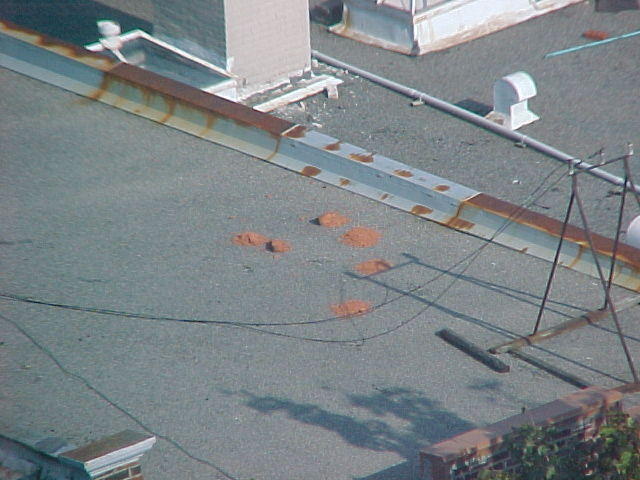
First is rooftops. The above picture is of a rooftop near where I work. You can see that the bricks leftover from a chimney repair have completely disintegrated into a conical pile of brick rubble. My guess is that the bricks have only been there for about a decade or two. Rooftops see quite a bit of the freeze/thaw because they are in unblocked sunlight all day. Plus there is usually some warmth escaping from below to melt the snow. Over the course of the past couple winters, I have been able to see the rooftops alternate between snow covered and clear throughout the season. Whereas the ground has constantly been covered with snow all winter long.

Second is the roads. They see the freeze/thaw often because unless the roads are dry, salt needs to be laid down after a night of freezing temps. It could be a small snowfall or the morning after some thawing, but it is often that roads need to be salted. Then there is the problem of ice lensing where water either coming down from the salted road or up from the unfrozen earth hits a cold layer. The water freezes and expands usually destroying the road surface above. The roads take one heck of a beating and I'll elaborate on the potholes soon.

Lastly is the sidewalks or concrete in general. I'll also elaborate soon on other abuses the sidewalks endure. But the sidewalks also see their share of salt. It is primarily those on the sunny side of the street that get hit hardest with the freeze/thaw. I am surprised each time and how often I see disintegrating concrete. It is not the strength of the concrete because I know they use the same strength as back home. The way it crumbles apart suggests that it must be the freeze/thaw. And it is not simply age because structures built in Chicago at the same time as the Turcotte interchange don't show as much superficial wear.

I'll have those posts on potholes and sidewalks in the upcoming weeks.

Friday, February 24, 2006

Montreal in Winter

This is the period that should be considered mid-winter. Because winter has been marching along up to this point, but from here on out it seems like an eternity to finish.

I've had enough. I'm ready for steady above freezing temperatures. I'm tired of changing shoes everytime I go outside. I'm tired of bundling up myself and everyone else to go outside. I'm tired of returning home in the dark at the end of the day. I know it's been a warm winter and I haven't worn any long underwear yet, but I'm ready to spend my weekends outside doing yardwork again.

Thursday, February 23, 2006

Year One

Tuesday was my one year anniversary with this blog. And it didn't even get me a present. My present was a new look (well, just a different color).

145 posts and 4417 visits. Who knew it would come this far. Thanks everyone for stopping by and here's to year number two. Maybe it will start walking soon.

Wednesday, February 22, 2006

Albertville 1992

I was studying abroad in Versailles, France in 1992. Over the course of my time there I got more and more comfortable traveling by train and more familiar with the train system. I had bought a couple Europass's for the year abroad and it made it very easy to get away for the weekend. So one weekend in February I charted an itinerary to get to Albertville to see the Winter Olympics. I was partially familiar with the area because I had visited Chamonix (to see the Alps, not skiing) one weekend the previous November. Since finding a place to stay would be very expensive, I opted for a daytrip. I took an overnight train to get there and an overnight train to get back to Paris. That way I only burned one day on the pass since the travel occured on the same day. So it cost about $50 if I remember right.

I arrived in the morning and people were saying that the only way to get up to the mountains to see some events was to buy a ticket. So I bought a 70 Franc ($14) ticket for the women's downhill in order to be able to get on a bus up to Meribel. I met some other American students on the bus and tagged along to the event. We decided to stay down at the finish because we did not know how long the event lasted, how difficult it would be to climb the run, much less how much we would be able to see higher up the run. It was very confusing to follow the event because we did not have a program and the leader board didn't mention anything other than the current placement. So we didn't know how many competitors were left. In the end, we saw some competitors finish their runs along with the medal ceremony. Kerrin Lee-Gartner of Canada finished first, Hillary Lindh of the US finished second, and Veronika Wallinger of Austria finished third.

After the event, I followed the other Americans for a while more. I remember that since we were students, we could not afford (or were unwilling to buy) the fairly expensive food. I think I ate a can of tuna fish directly out of the can that I had brought with along with a small piece of bread. I ditched the others and strolled around on my own. It was quite an interesting scene. People from many nations showing pride in their country by wearing clothes displaying some form of their flag. But I remember being a bit embarrassed about how many more Americans were dressed like that. It was a bit more 'in your face'. It is possible there were more Americans because there was a US hockey game that day there in Mirabel. I started asking around about tickets but heard the prices were very high. There was not much left to do, so I took the bus back down to Albertville.

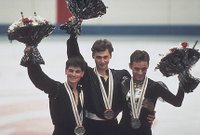
In Albertville, there was the stadium where the opening and closing ceremonies took place, the speedskating venue with a jumbotron outside, the figure skating venue, and a Coca-Cola tent. I quickly found out that pins were a big trading item between spectators. You meet someone, you trade pins. And of course, Coke was there selling them. I bought a couple as souvenirs but was not interested in participating in the exchanges. After a while of mulling around, I figured out that other than watching speedskating on the Jumbotron (not know what the heck was going on), there would not be much to do unless I shelled out big bucks for a ticket. I lucked out, extra tickets for the mens figure skating finals would be going on sale soon. So I waited in line and paid more than any other ticket I have ever bought. Even to this day. Good thing I brought the tuna. The ticket was worth it. I was actually able to follow what was going on and I was sitting with a bunch of US TV people (cameramen, audio, etc) who were there for the games. They gave me pins and understood when I didn't have any for them. But as the competition was wrapping up, I realized that I would have to run like mad to catch my train. I watched the medals ceremony from the exit, then dashed for the train. Viktor Petrenko of the Unified Team finished first, Paul Wylie of the US finished second, and Petr Barna of Czechoslovakia finished third. I found out when I got to the station that my train left without me, but luck was on my side, again. There was a special train of only sleeping cars leaving direct to Paris. I paid the little extra and woke up early the next morning back in Paris.

Photo borrowed from Albertville Olympics website

One of the things I realized is that you either need tons of money or some planning to see many of the events. For instance, you need to know where is the best place to see skiers or bobsleds wizz by. You need a program, but then you also need some more recent info to know who is where in the standings at any given moment. Or you need to be able to buy very expensive tickets to have a seat in a venue.

But there is one aspect that doesn't cost a thing. And that's just walking among all these people from different places here to cheer on their countrymen. It was a special kind of vibrancy that was very cool to experience.

Monday, February 20, 2006

Music as Identity - Part 9 - Summation

There it is. Industrial, New Wave, Singer Songwriters, Electronica, Dance, Grunge, and Misc. And no one is happier to see this series over than myself. It has lived on out of duty to finish what I started. Now I can move on to other things. That said...

It has also been interesting to see really where my tastes lie. Although I casually will listen to most types of music, the types that I seek out have fallen under the umbrella of Electronica or New Wave. Industrial , dance, and synth pop fall under electronica. Bands who I considered more mainstream like Duran Duran, Talking Heads, Smithereens, XTC, etc all fall under New Wave according to Wikipedia. So the genres that really have interested me through the years are more narrow than I had originally thought. But as this series shows, it is more complex than just saying I like New Wave and Electronica.

So what was the point of this whole exercise? There were a few. Primarily it was reminising (and rambling), then looking back with some perspective, but also to look back and see how this is representative of my overall identity. Who I am and what part of my identity is expressed through my musical tastes? If it can be summarized, my musical tastes have generally been a step away from mainstream, fairly varied, and contemporary. And that holds for my tastes in other parts of culture and society. One question is how often the musical tastes of others reflects who they are? Or are there really people out there that are Christian conservative who listen to heavy metal or gangsta rap?

As I have been composing this series and looking at the variety (or lack of consistancy if you will) of the music I have listened to, there are some other conclusions. First, my prefered bands at any moment in my life are strongly influenced by the people around me. For each genre I can name one or two people who have introduced me to the music and/or I have shared the interest with. With that said, the ideals and personalities of those people are generally something I had in common with them. And stereotypically, we shared in common those same things with others interested in that type of music. (Yes, I am roughly extrapolating that contemporary minded people are liberals who appreciate art and listen to electronica music.) That may be why there was the connection both on a personal level and on a common interests level. They have been strong friendships since all of them have lasted to this day, some for close to two decades now. So this may be the reason I have felt so strongly about musical taste. And why I feel it is such a telling part of my identity. It is not only about the identity, but also the emotions and memories that they evoke.

Sunday, February 19, 2006

Get the Red Out

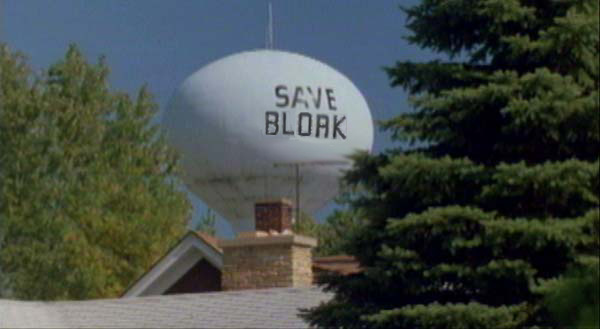
The white army now has combatants in place and their numbers are growing. The question is whether the red nation will be overthrown in one fail swoop or be slowly broken down into extinction over time. Then there is the question of whether both armies together will begin retreating from the summit.

Saturday, February 18, 2006

A Bit of Olympic Levity

Yes, it's not very PC, but it is still pretty funny.

Friday, February 17, 2006

Montreal from Above


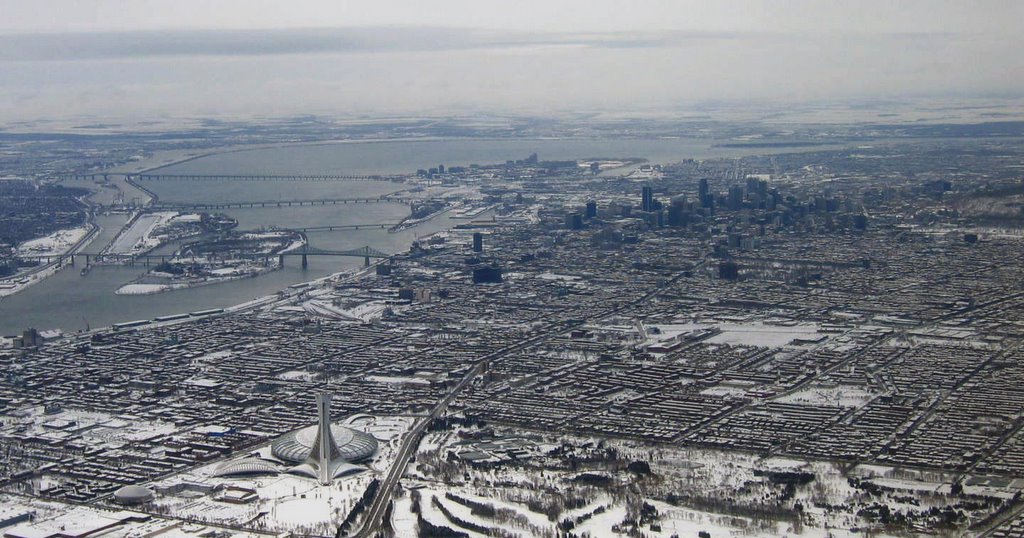
This shot was taken a couple years ago on the approach to Dorval airport. Click on it for a larger image.

Thursday, February 16, 2006

Anonymous from McGill

65 page views, 13 comments left, and over two hours on the site.

Thank you very much for the comments, Anonymous from McGill. They are interesting and concise. I'll try to respond to them in a timely manner. As mrne, the elder, and cathy know, I can be bad at responding.

Logging in as Anonymous without a moniker brings out something I have been thinking about for a while. I am very lucky have only had a few confrontational comments from unidentified anonymous people. The majority have been regular comments. Though I do worry that it may increase one day. I have continued and will continue to allow them in order that people are not hindered from commenting by being required to register. But I do ask that people leave a moniker such as 'hj', 'fred', or 'the worlds best suduku player'. I don't know why but that little tag makes me feel better.

Again thank you everyone for the comments and feel free to keep them coming (with monikers).

Wednesday, February 15, 2006

The Medal Hunt - Summer Olympics 2004

At every Olympics the medal count is unfortunately always followed by all the news media and many spectators. There is always talk of how countries fair in the count and some rumbling about how some countries dominate the medals. So two years ago, it got me to thinking. Really how well does the US and Canada fair versus other countries in relation to the population or number of athletes to medals won. I sat down with the 2004 Summer Olympics website and a spreadsheet and took note of the population of each country, the number of athletes sent, the number of gold medals, and the number of overall medals. Using these categories, I determined the population per athlete sent, population per gold won, population per medal won, athletes per gold won, and athletes per medal won. The results are quite interesting. Please keep in mind that the accuracy of the results rest on the accuracy of the website (athletes per country) and a guy crunching the numbers during his lunch hours two summers ago.

Using all the data, here are some overall results. Almost every (200) country sent athletes. There were 10,500 athletes by my count. There were actually somewhere near 12,000 or 13,000 so I know that figure is incorrect. But the ratios should still be fairly accurate. If anyone can direct me to somewhere that has the accurate number of athletes per country, I will revise the numbers to see if there is any change. 57 countries won golds and 75 won medals. The largest country not to win a medal was Pakistan (159 million). Algeria was the country that sent the most athletes (80) and did not win a medal. India was the largest country (1.07 billion) not to win a gold and Mexico sent the most athletes (114)without winning a gold. The country of Nauru had the lowest population per athlete sent (4270). Myanmar (Burma) had the highest population per athlete sent (42.72 million, talk about pressure). For comparison the US was 121 out of 200 in this category, Canada was 75. The rest is in table form in order to reduce the text.

Population per medal won
150,000 - The Bahamas (#1)
406,000 - Australia (#2)
420,000 - Cuba (#3)
2,710,000 - Canada (#38)
2,840,000 - USA (#62)
6,860,000 - Average
1,065,000,000 - India (#75)

Population per gold won
300,000 - The Bahamas (#1)
915,000 - Norway (#2)
1,170,000 - Australia (#3)
8,370,000 - USA (#34)
10,840,000 - Canada (#38)
21,180,000 - Average
238,000,000 - Indonesia (#57)

# of athletes per medal won
3.80 - Azerbaijan (#1)
4.00 - United Arab Emirates (#2)
4.33 - Zimbabwe (#3)
5.95 - USA (#6)
11.15 - Average
13.92 - Canada (#45)
106 - Ireland (#72)

# of athletes per gold won
4.00 - United Arab Emirates (#1)
8.63 - Romania (#2)
10.60 - Norway (#3)
17.51 - USA (#12)
34.41 - Average
67.67 - Canada (#46)
142.00 - Czech Republic (#57)

But the above numbers can be a bit skewed since small countries can send many athletes or if a few people win medals from a small country, they can bump up their percentage. So if the countries are limited to those of at least 10 million people and at least 50 athletes, there are only 42 countries left. So now how does it stack up.

Population per medal won
406,000 - Australia (#1)
420,000 - Cuba (#2)
590,000 - Hungary (#3)
2,710,000 - Canada (#18)
2,840,000 - USA (#19)
5,560,000 - Average
1,065,000,000 - India (#42)

Population per gold won
1,170,000 - Australia (#1)
1,250,000 - Hungary (#2)
1,260,000 - Cuba (#3)
8,370,000 - USA (#16)
10,840,000 - Canada (#19)
17,020,000 - Average
76,120,000 - Egypt (#36)

# of athletes per medal won
3.41 - Russia (#1)
3.63 - Romania (#2)
5.93 - Cuba (#3)
5.95 - USA (#4)
6.45 - Average
16.92 - Canada (#27)
60 - India (#42)

# of athletes per gold won
8.63 - Romania (#1)
11.63 - Russia (#2)
12.72 - China (#3)
17.51 - USA (#6)
28.91 - Average
67.67 - Canada (#28)
142.00 - Czech Republic (#36)

So what does this all say? Well for one, Australia, Hungary, and Cuba are good. Romania, Russia, and China are good at sending only their best athletes. It was noted in the media here in Canada that maybe they were sending too many and these statistics kinda confirm it. Contrary to what I was trying to prove, the US does quite well with the athletes they send. Yes, they had the most athletes, most golds, and most medals, but these statistics do show that relative to their population, they were not the best. They were middle of the pack.

I plan to do the same for these Winter Olympics. If I remember correctly, a preliminary look last time around suggested that Norway is quite dominant. Look for the Winter installment in March. It'll take a few lunch hours.